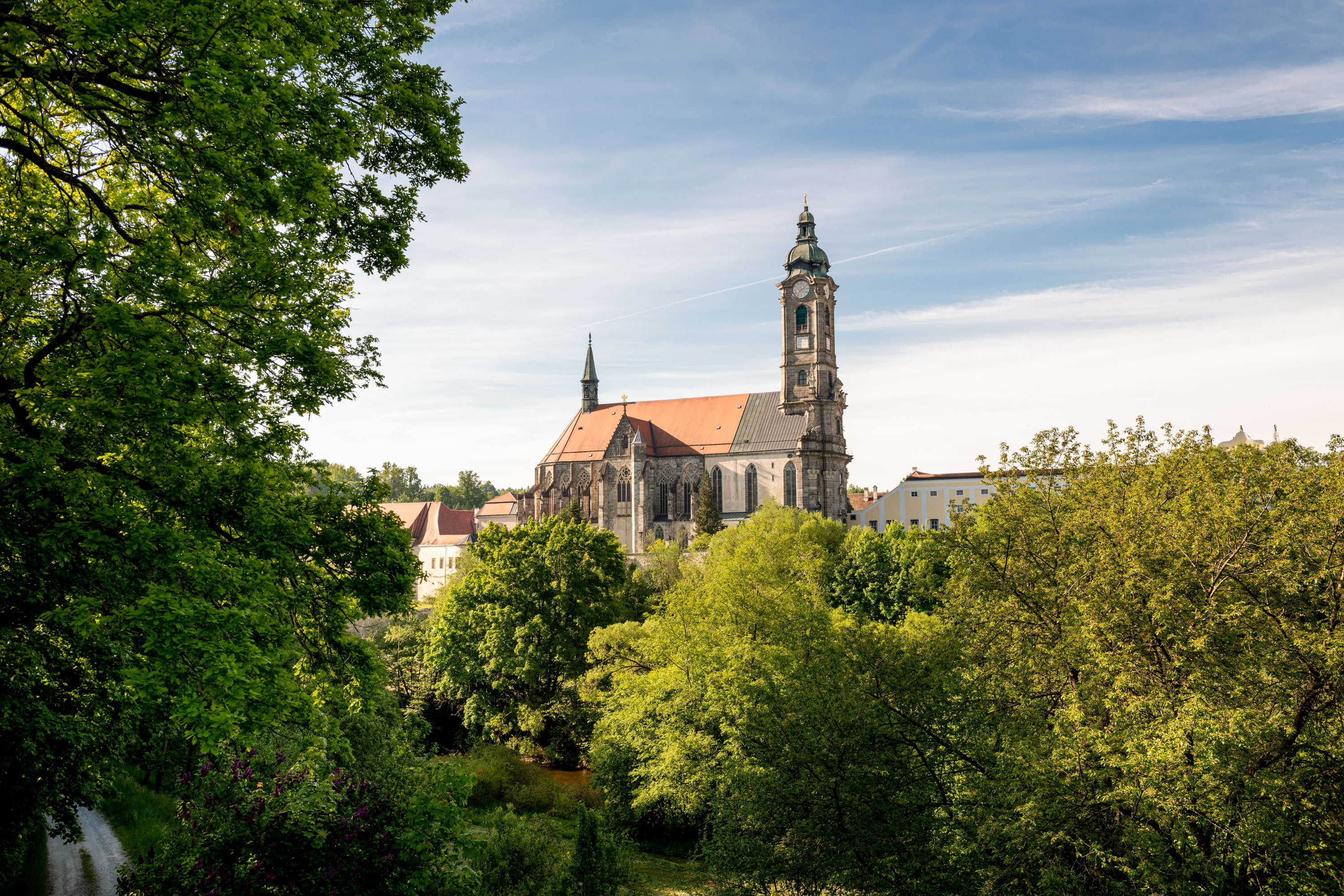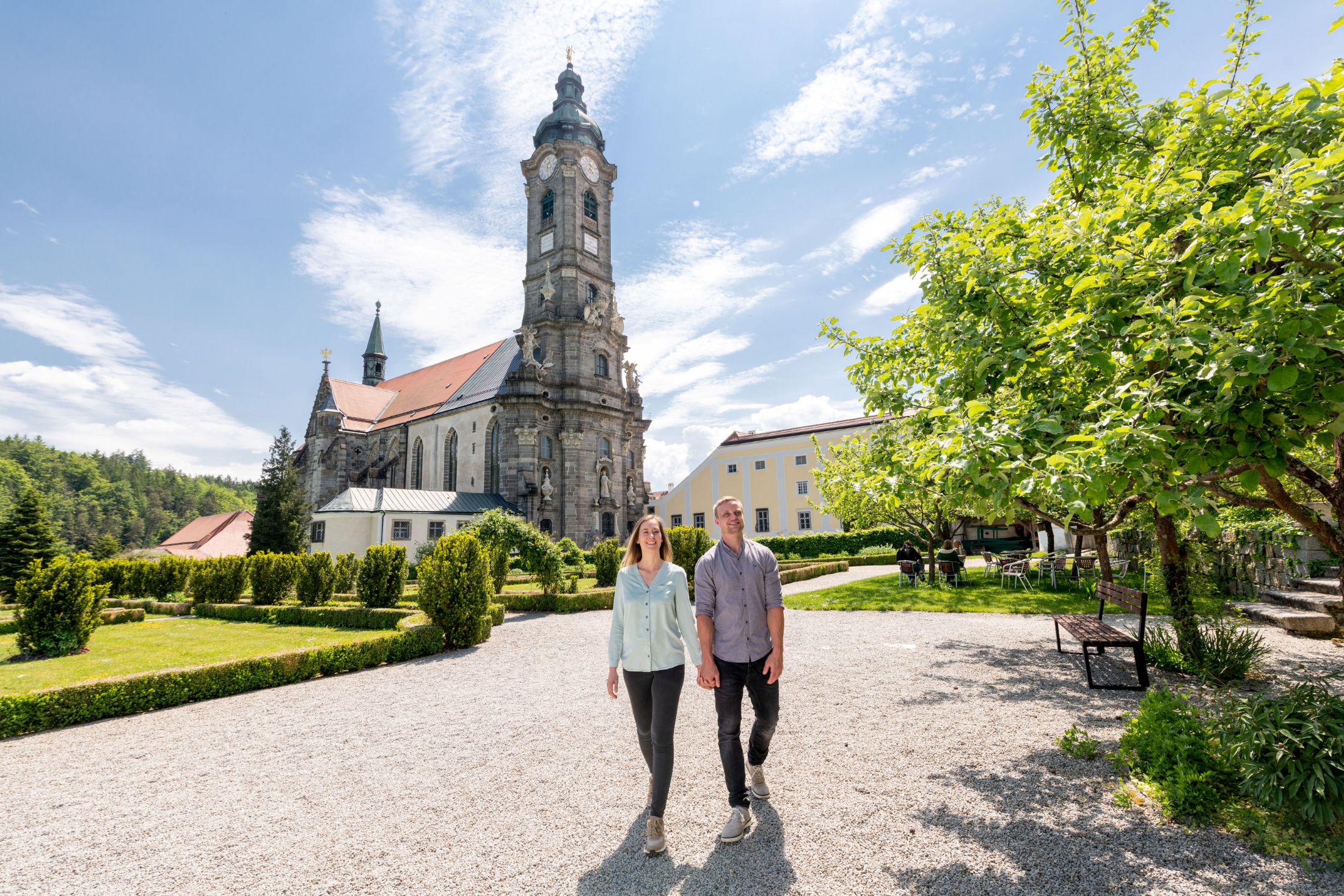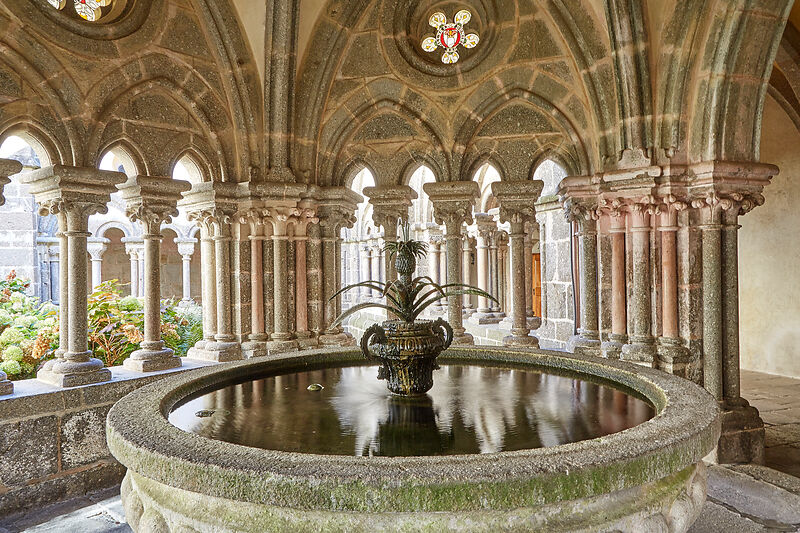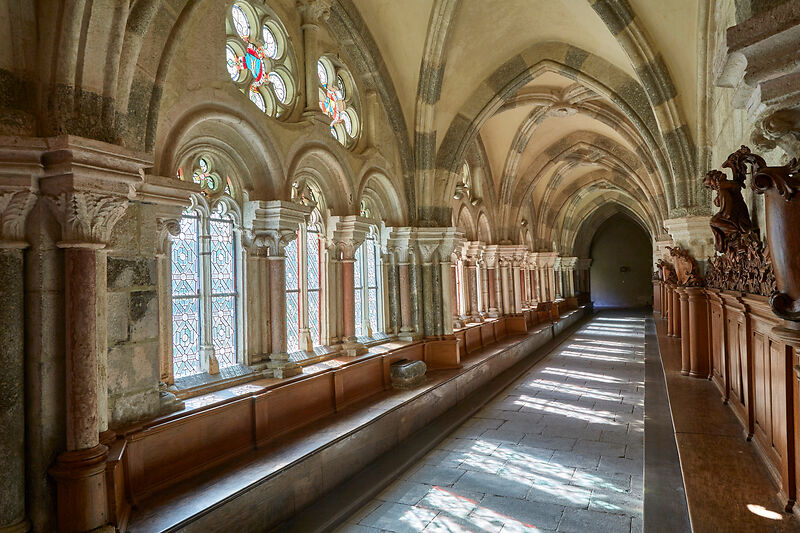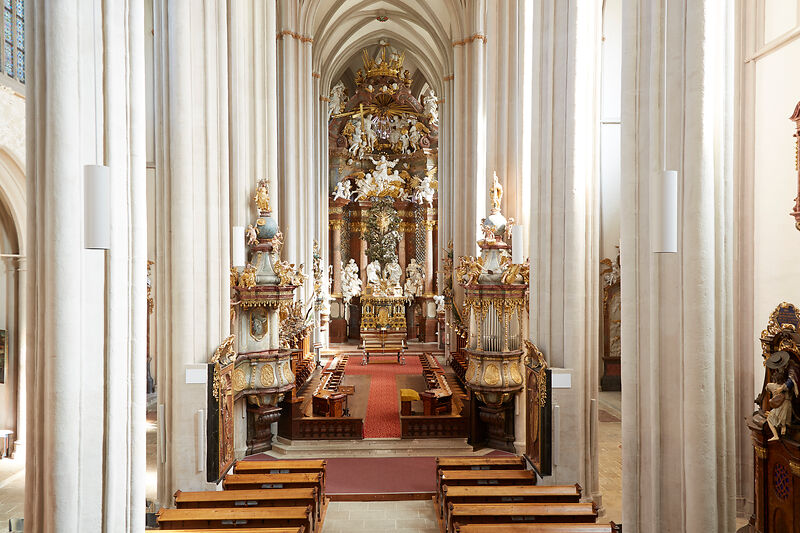
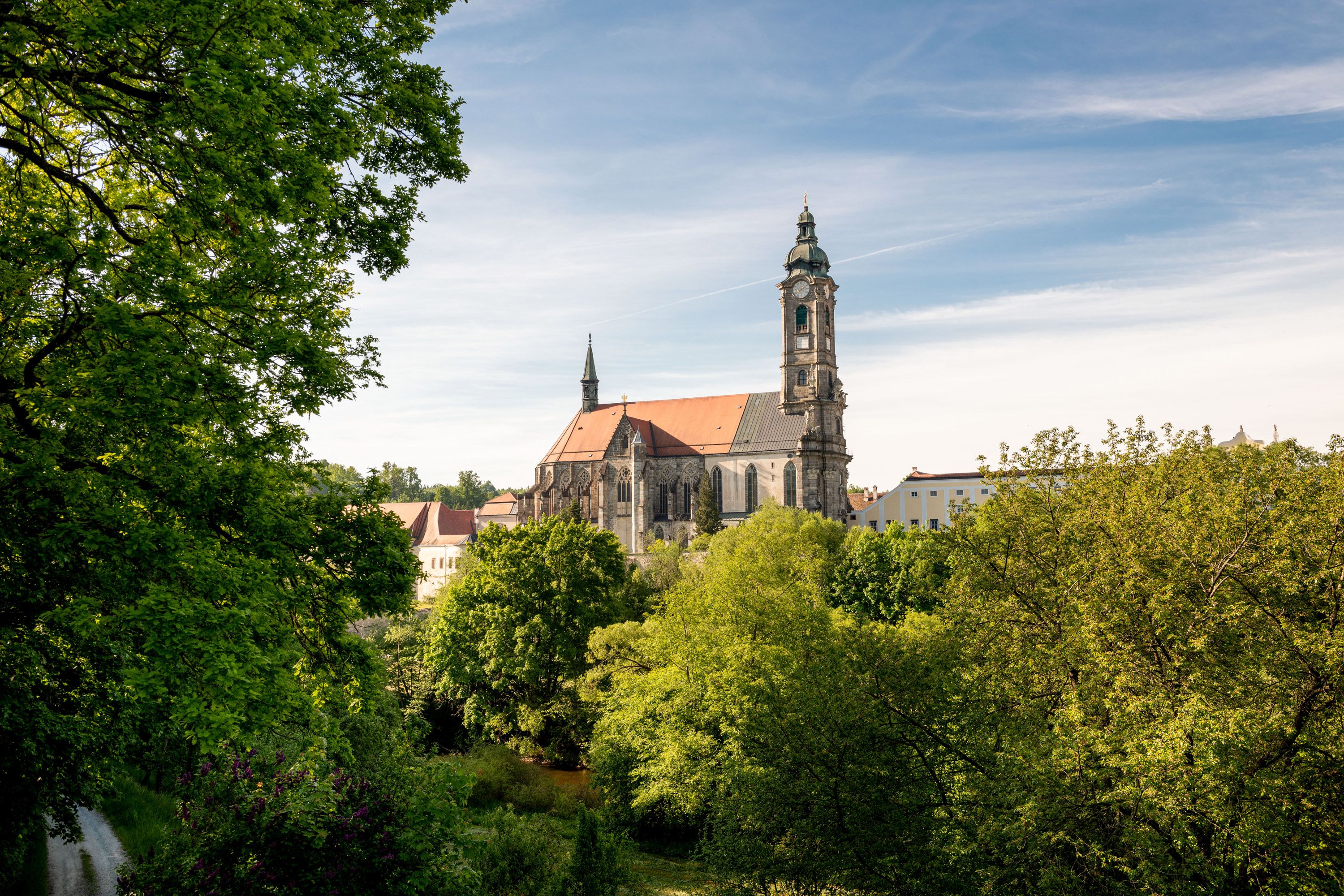
Situated in the middle of idyllic forests on a loop of the Kamp river, Cistercian monks have lived and worked here since 1138. This makes Zwettl Abbey the third oldest Cistercian abbey in the world, which has been an active monastery without interruption. An audio tour takes you along the Kamp river and through the extensive vaulted cellars to the cloister with its well house and chapter house or through the historic gardens. The collegiate church surprises visitors with its rich baroque interior. It is accessible daily with guided tours. Tours of the baroque library, the treasury and the special exhibition "Cisterscapes - The Zwettl Monastery Landscape as European Cultural Heritage" are also offered daily.
Cultural heritage dating back thousands of years
The monks of Zwettl have traditionally devoted themselves primarily to pastoral care. Their history began in 1138, when Hadmar I of Kuenring founded a monastery near the town of Zwettl and summoned Cistercian monks from Heiligenkreuz to the Waldviertel region. They constructed the abbey’s medieval buildings and established an economic foundation by cultivating the land. In the wake of the wars and Reformation movements of the 15th and 16th centuries, the monastery fell into decline. It did not begin to flourish again until the mid-16th century. At the end of the 18th century, political pressure led to a far-reaching change in monastic life: the monks increasingly turned their attention to pastoral care in the 15 parishes entrusted to them. The monastery survived both world wars and the Nazi era unscathed. In the 1990s, the monastery founded the Higher Institute for Environment and Economics; the educational center has been offering adult education programs for nearly 100 years. Forestry and fish farming form the backbone of the monastery.
An Art-Historical Gem
Cloister, fountain house, chapter house, dormitory, scriptorium, and lavatory—from an art-historical perspective, the abbey features outstanding examples of medieval architecture. As part of the large-scale Baroque renovation under Abbot Melchior Zaunagg, the church also took on a new appearance: A monumental tower façade greets visitors, while the interior is dominated by the imposing high altar, 16 side altars, the inlaid choir stalls, and the famous Egedacher organ. A new library was also created and decorated by Paul Troger with scenes from the Labors of Hercules across five vaulted sections. The treasury offers glimpses into the spirituality of bygone eras. It’s impossible not to be in awe here.
A Blooming Paradise
It’s not just the Prelates’ Garden that catches the eye: Monks have lovingly crafted spaces around the abbey designed to evoke paradise. Since time immemorial, these have been places of silence, contemplation, enjoyment, and relaxation.
Baroque Delight
Lovers of Baroque music, in particular, flock to the abbey in the summer: during the International Concert Days, the abbey church and library provide the perfect backdrop for unforgettable performances.
Bernhardiweg in the Waldviertel
Zwettl Abbey serves as the starting point for the 125-kilometer-long pilgrimage route known as the “Bernhardiweg in the Waldviertel.” From there, the pilgrimage route connects the ten abbey parishes in the municipalities of Zwettl, Schweiggers, Weitra, Großschönau, and Groß Gerungs.